
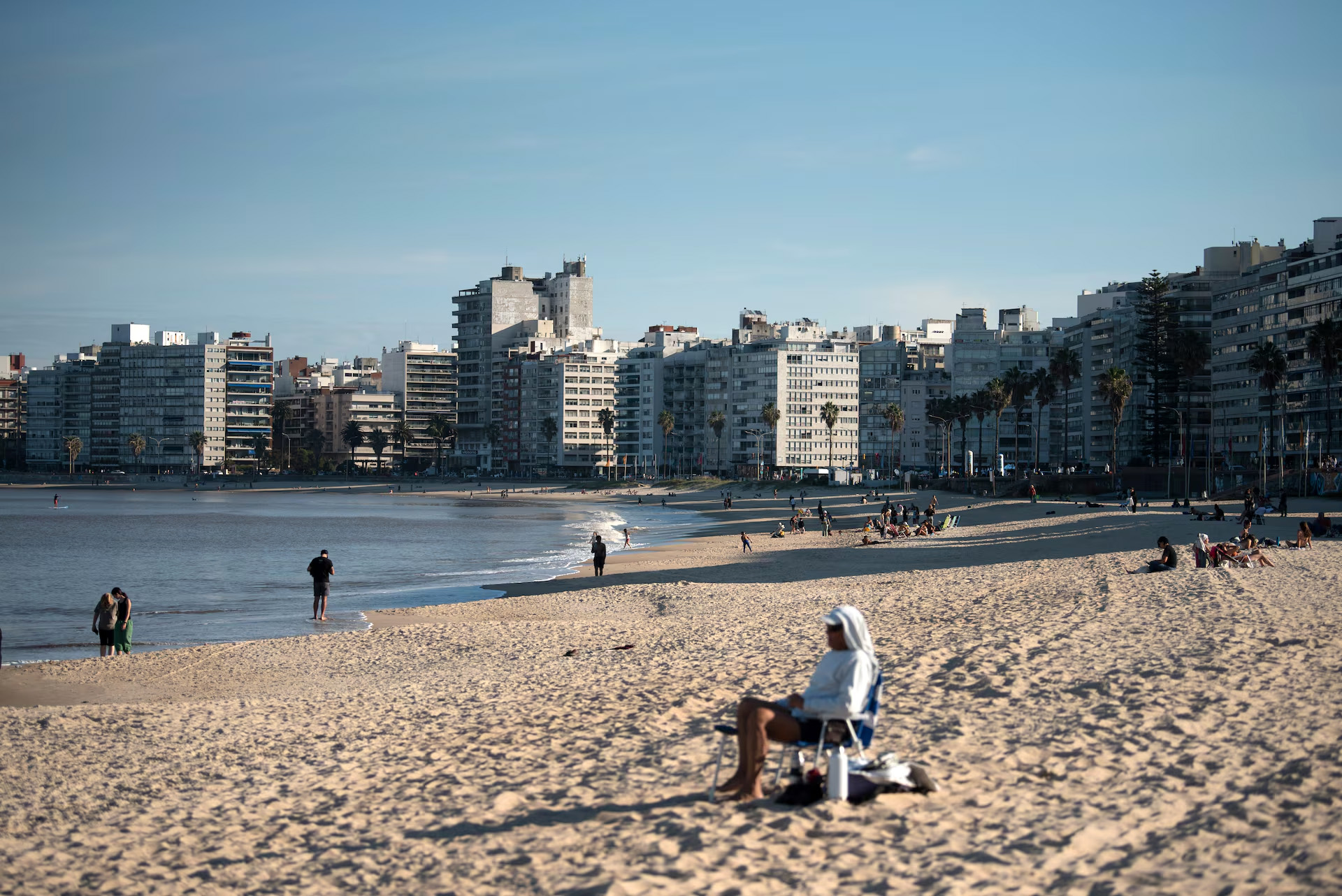
Uruguay’s coastal capital of Montevideo,only a short ferry ride from bolder Buenos Aires, may seem an unlikely choice for a foreign correspondent. This slower-paced port city overlooking the River Plate estuary on the edge of the Atlantic is the fifth South American city I’ve called home, having worked as a journalist in this region for nearly a decade — most recently as Southern Cone correspondent for Reuters. After more intrepid stints in Argentina, Brazil and Venezuela,the take-your-time attitude of Montevideo rubs off nicely. It is by far the smallest place I’ve settled — 1.3 million residents barely equate to my hometown area of south London. But being compact, close to nature and casually understated, with a rich Art Deco heritage, you soon forget you’re even in a city, making it a lovable location to work and travel from.

Here are my top tips to exploring this city like a local:
The way around: Montevideo slopes down away from its port towards residential areas that face the Atlantic coast, lined by beaches, sailboat docks and a long, rambling walkway called, appropriately, La Rambla. This paved path stretches nearly 14 uninterrupted miles (22 km) along the river wall and acts like a narrow public park where you can cycle, rollerblade, cast a fishing line or paddle-board adjacent to the shore. While locals often come here to exercise during their lunch breaks or after work, you can also opt for a simple stroll — there’s even a Spanish verb for it, “ramblear” — or pull up a chair on one of the beaches below. “A folding chair is non-negotiable when enjoying life,” is a phrase Julián Medina, who brought his coffee business over from Colombia, said Montevideo had taught him. There are few such cities in the world where it is you who gets to set the pace.

Biggest misconception: Some people think of this “tranquilo” city as just a pit-stop on the way to Argentina’s more glamorous Buenos Aires or to the popular Uruguayan beach resorts of Punta del Este and José Ignacio. But Montevideo is becoming a destination in its own right, with a thriving arts and culinary scene. The city is blooming with new businesses, says Hungry Art gallery owner Ceci Ortiz, who returned to her hometown from Spain to establish a multi-purpose arts space set out like a living room. Youngsters flock to her events in the Ciudad Vieja, or Old Town, the city’s historic quarter. Lined with colonial buildings, it is home to artist studios such as Casa Wang, which features drawing classes and pop-up fairs; gin distilleries like Capicúa, known for its cocktail bar; and cultural centers including the Centro Cultural de España, which hosts concerts, exhibitions and rooftop film screenings.
Lunch break: Plenty of places serve lunch to cater to week-day office workers, but the Old Town tends to die down at dinner — generally served after 8.30pm — so double check opening times. Uruguay’s quality beef is world renowned — try ribeye steak (ojo de bife) at Jacinto near my favorite square, Plaza Zabala, or breaded beef cuts known as milanesas, traditional to the River Plate area, served throughout the city. If you prefer fish, there’s Es Mercat nearer the port or Korean dishes by Arariyo.

From these restaurants you can walk through the gates of the Old Town to admire the Palacio Salvo that dominates the Plaza Independencia — a spectacular mix of Art Deco, Art Nouveau and Neo-Baroque design. The building with its 95-meter (312-ft) tower was once the tallest in South America and guided tours to the top are available. From there, turn onto Avenue 18 de Julio where more Deco can be found above the shops housed in 20th century marvels like the Palacio Diaz and Palacio New York, inspired by North American skyscrapers. Many architects emigrated from Europe to Uruguay and were keen to experiment with distinctive Deco styles.
The definitive drink: Mate (pronounced MAH-tay) is a bitter, caffeinated green tea made from the yerba mate plant that is native to southern Latin America. Dried leaves are placed in a gourd, or small cup, usually made from wood, filled with hot water and inserted with the bombilla,a metal straw with a strainer used to sip the drink. Mate is almost always shared and topped up at regular intervals. So important is the beverage to Uruguayans — including some of the world’s best soccer players — that many carry thermoses of hot water with them to top up their gourd at any moment!

As an English tea drinker, I’ve struggled to understand how to sip tea from a perforated spoon-like straw. So if, like me, you prefer coffee, try Julián Medina’s Monday Project on Calle Colón 1321, where you can sample different blends. LAB Coffee Roasters up from the Rambla is set inside the gardens of the National Museum of Visual Arts, or you could walk along the tree-lined streets of the Parque Rodó neighborhood to newcomer Paraíso.
The definitive snack: Uruguay’s thin chickpea flat bread known as fainá is my go-to snack — served throughout the city, but mastered at Pizza Quinta. Baked in the oven, sprinkled with white pepper and suitable for those who go gluten free, fainá originated in Genoa and is best washed down with a glass of Albariño or vermouth, cultivated from dozens of vineyards that border the capital. Family-run Bodega Pizzorno arranges tastings year-round, starting from $34 per person.

Not to miss: The Tristán Narvaja street market, runexclusively on Sundays, is no newcomer. My grandmother used to barter for antiques at this open-air flea market in the 1940s. Stalls today stretch for over 50 blocks in the center of town, selling a mix of farmers’ produce, art and treasure troves of garage-sale bric-a-brac. Recycling and reupholstering is taken seriously in Montevideo, where high import taxes make manufactured goods expensive.
Iconic artist: My neighbor is an opera singer, the man opposite plays the trombone and everyone from software engineers to psychologists seems to know how to play an instrument (or two!). Montevideo at times reminds me of Cuba’s Havana: There’s a constant tune playing somewhere from one of its many Belle Époque domes. Candombe is the city’s signature genre. This Afro-Uruguayan musical style centered around drums is performed by groups called comparsas. Street practice picks up towards Carnival (which takes place between late January and March) in the Barrio Sur neighborhood, but you’ll spot groups heating their drum skins around a fire to fine tune them out of season in the area. Take a seat at corner bar Montevideo Al Sur to hear performers nearby. For a more formal gig setting, there’s Sala del Museo Carnaval or Sala Zitarrosa in the Old Town.

Hit the beach: Montevideo is a beach town through and through. The city has 19 to choose from and all are warm enough to enjoy during the Southern Hemisphere’s summer from late November to April. Ramirez Beach is best for volleyball courts or diving off the rocky outcropping at Kilometer 3 of La Rambla. Kite surfers head east to windier Malvín, sunbathers prefer central Pocitos and Barra Santa Lucia further west is best for kayaking.
Getting away: What’s on offer within a short two or three hour trip is part of Montevideo’s draw. My advice: Catch the kitsch ferry across the River Plate to Buenos Aires (round-trip tickets start from $80), drive west to Santa Ana Beach, which is backed by pine, not palm trees, or watch films under the stars at JIFF Festival each January in fishing village José Ignacio to the east.

CITY MEMO DATA POINTS
Population: 1.3 million
Price of hot water for your mate thermos at a roadside stall: from 35 Uruguayan pesos ($0.80)
Price of ice cream: 190 pesos ($4.50) for one scoop at La Cigale, which has sites all over the capital. The dulce de leche flavor handmade by Antonio at Don Antonio’s for 150 pesos ($3.60) is a must.
Fun fact: Uruguay hosted the inaugural FIFA World Cup soccer championship in 1930 at Montevideo’s main stadium — and won.
Essential read: “Montevideo: La Bella Durmiente” by former El País correspondent Magdalena Martínez, which offers readers an architectural tour of the city famed for its Art Deco sites.
Popular car from local dealership: High import taxes make Uruguay one of the most expensive places to buy a car globally. China’s BYD is taking off — the third best-selling carmaker in 2024, coming in at just under $22,000 for a Seagull model from Montevideo’s BYD dealership. (Lucinda Elliott/Reuters)


You must be logged in to post a comment.