
Sleep tourism to grow by 12.4% annually, 5 things sleep-friendly cities have in common
With sleep tourism growing by 12.4% annually up to 2030, leading sleep expert reveals how Vilnius, with its internationally recognized green spaces, walkability, and calm evenings, is the perfect destination for travelers driving this new trend.
The growing popularity of sleep tourism is linked to the role that rest plays in mental and physical health. Research shows that travelers often cite rest and recharge as their primary motivation for going on vacation.

As sleep tourism is expected to grow by 12.4% annually from 2025 to 2030, the demand is rising for sleep-centric accommodation, located in green and calm city environments, with clean air, less light, and noise pollution.
According to Laura Bojarskaitė, PhD, one of Lithuania’s leading neuroscientists and sleep researchers, rest-inspiring capitals share some special characteristics:
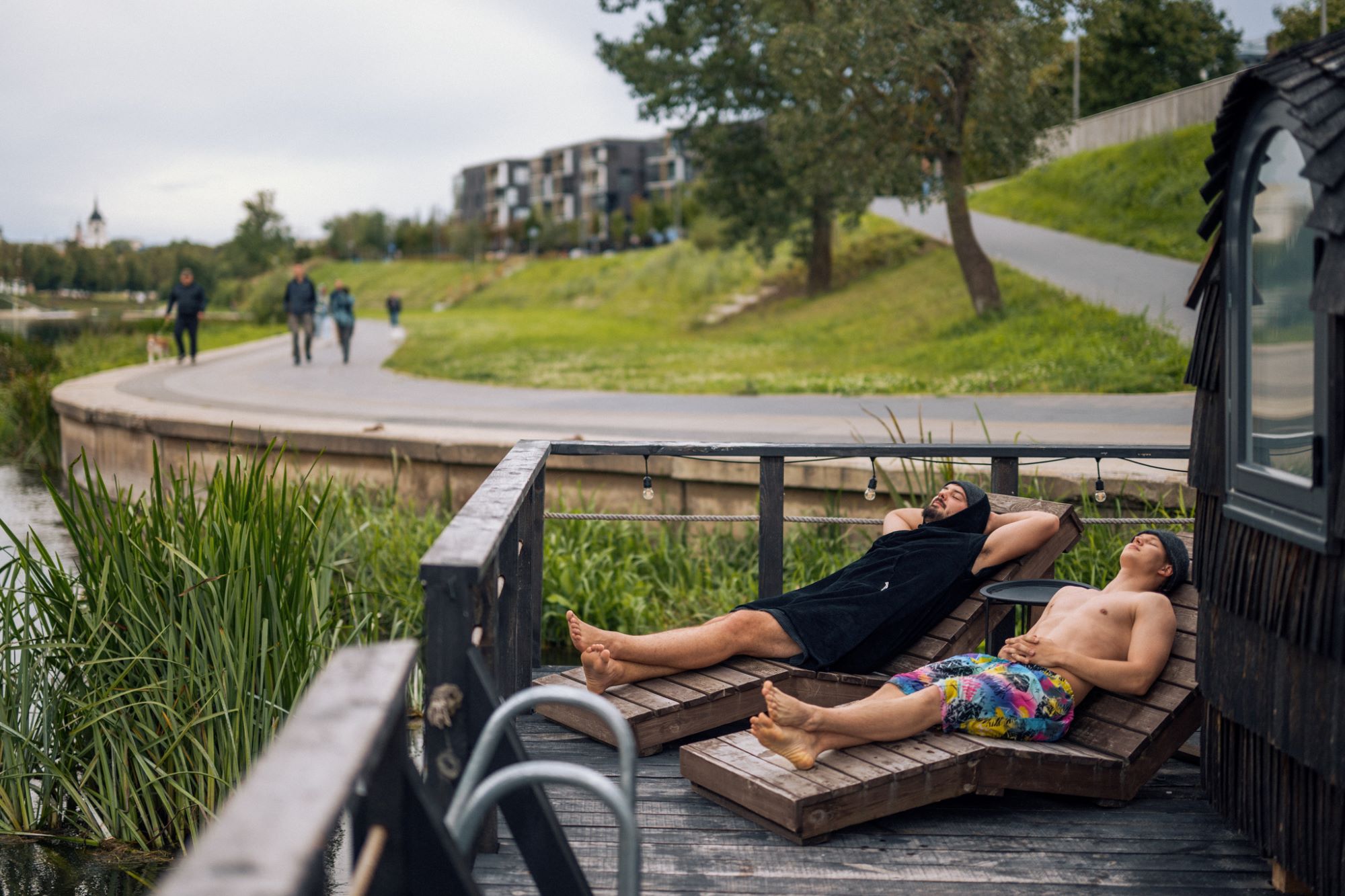
Green spaces, parks, ponds, rivers
According to the scientist, when people spend time in natural environments, their cortisol levels tend to drop. Cortisol is the primary stress hormone, and while it’s essential during the day, it needs to decline in the evening for sleep to begin smoothly. In cities where green spaces are easily accessible and integrated into daily movement, visitors may unknowingly be giving their nervous systems exactly what they need to wind down at night.
Visible sky and open space
Sleep-friendly cities have visible sky and open space rather than constant vertical compression from high-rises. They integrate water and greenery into daily movement, and quiet down at night in a noticeable way.

Cognitive spaciousness.
In some cities, navigation is stressful due to multiple transport transfers, heavy traffic, and constant noise. In others, travelers can orient themselves easily – meaning they don’t feel overwhelmed. The reduction in cognitive load matters – when the brain spends the day processing less chaos, it enters the night with lower arousal. In a compact, easy-to-navigate city, people feel oriented and less overwhelmed. They are not constantly problem-solving routes or managing time pressure. That reduction in cognitive load means fewer racing thoughts at bedtime.
Walkable cities
When distances are shorter and a city is walkable, visitors naturally move more during the day. Walking increases adenosine accumulation in the brain – the molecule that creates sleep pressure. The more adenosine builds up, the stronger the drive for deep sleep at night. Physical movement during daylight also strengthens circadian timing by exposing people to natural light at the right time of day. Walking through a compact city center or along a river allows attention to relax. That reduces mental rumination at night – one of the most common causes of delayed sleep onset.

Calmer evenings
Calmer evenings matter just as much. Sleep requires a shift from sympathetic (“fight or flight”) dominance to parasympathetic (“rest and digest”) dominance. In cities where streets quiet down, traffic reduces, and visual stimulation decreases after sunset, the nervous system receives cues that it is safe to power down. Cortisol can fall naturally, heart rate decreases and the brain transitions more smoothly into sleep onset.
“In sleep-friendly cities, there’s a whole system of rest-support: more walking builds sleep pressure, calmer evenings reduce stress activation, green spaces lower cortisol and support parasympathetic tone, and predictable urban rhythms strengthen circadian alignment,” said Dr. Laura Bojarskaite. “Together, those factors create the ideal biological conditions for faster sleep onset and deeper, more restorative sleep. Vilnius is one of the most sleep-welcoming cities in Europe, as it ticks all of these boxes.”

In this emerging trend, Vilnius earned the top spot as the world’s sleep tourism capital. The city scored highly thanks to its excellent air quality, green spaces and crisp nighttime temperatures (around 12-14 °C in peak summer). “Temperature and light play roles too. Capitals that cool down after sunset and have lower light pollution give the body stronger circadian signals. That biological clarity – bright days, darker nights – helps regulate sleep timing naturally,” said Dr. Bojarskaite.
Other cities who scored highly include Dresden, whose rainfall and low-light levels are said to be key components of its ranking. Poznań in Poland also features on the list, like Vilnius, for its high air quality, while Warsaw and the Latvian capital, Riga, are recognized for their green spaces.
At the same time, Vilnius’ compact layout makes it very walkable, and UNESCO-listed historic streets and vibrant neighborhoods are easy to explore, while allowing visitors to be on their feet for longer periods of time.

With over 60% green space, Vilnius also offers abundant nature experiences – travelers can kayak in the river Vilnelė that runs through the Old Town, hike forest trails located within the city’s limits, forage for mushrooms and berries or swim in one of the city rivers and multiple lakes with sandy beaches. In recognition of its green spaces and commitment to sustainability, the city was elected as European Green Capital in 2025 following a competitive selection process.


You must be logged in to post a comment.