
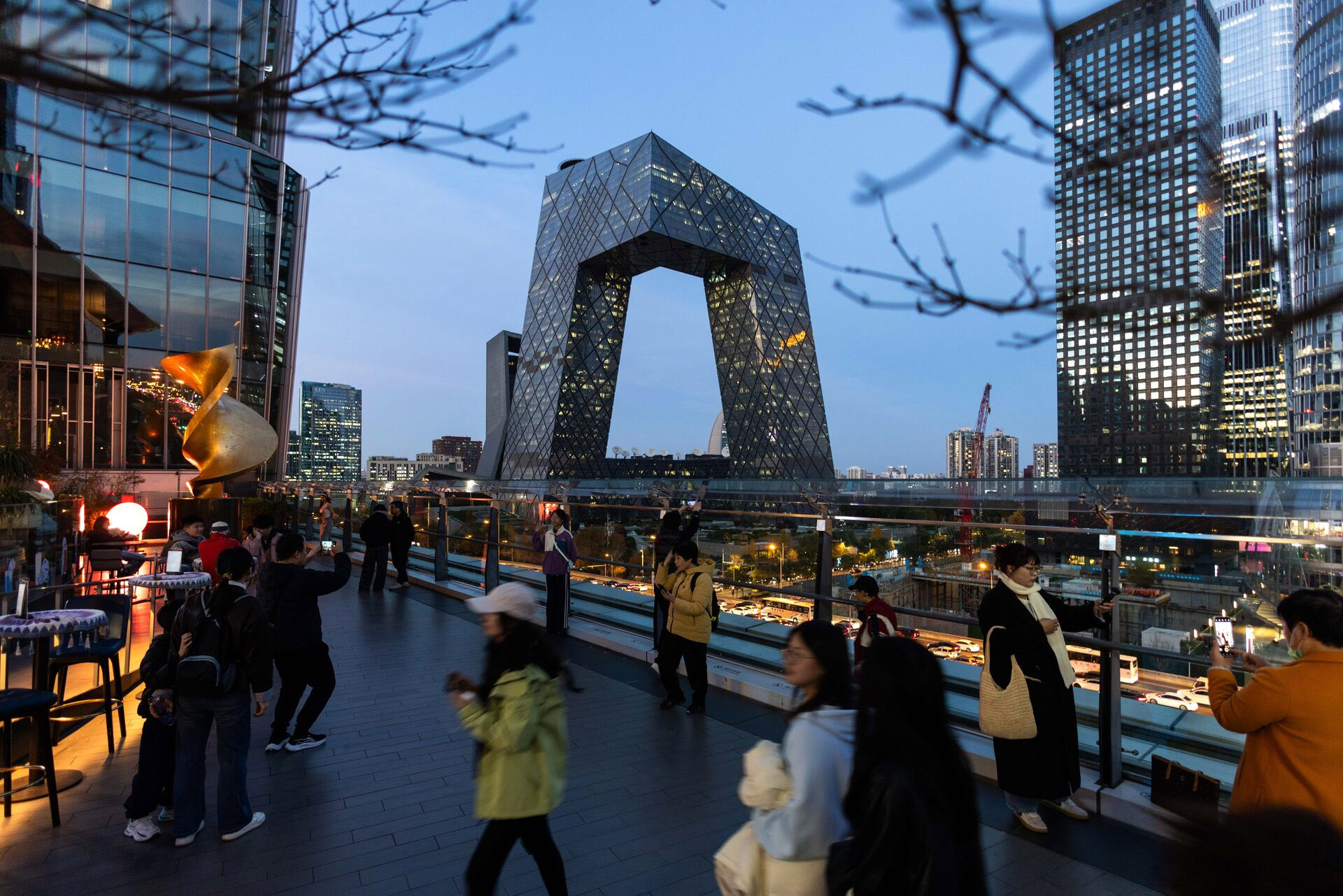
Chinese capital is seen across the country as a barometer of the nation’s global standing
I first visited Beijing in 2012 on a school trip. Coming from the British countryside, it was unlike anywhere I had been before and I began plotting my return. Four years later, I moved to the Chinese capital to study Mandarin.
Nearly a decade on, I am still here, reporting from the political heart of the world’s second-largest economy as a Reuters breaking news correspondent.

Beijing has changed considerably in that time. During the pandemic, China turned inward and became practically inaccessible to foreign visitors, but a number of nationalities now enjoy visa-free travel. Many of the mobile apps essential to getting around now have English-language versions, making the city far easier to navigate — no small feat in a place where Google is banned.
The factory smog that once blanketed the city is largely a thing of the past, locals are less surprised to see foreign visitors, and most places now take international credit cards.
Here are my top tips on how to explore the city like a local:

Getting around: Beijing has an efficient subway system, but as a fairly flat city it is worth considering exploring by using its ubiquitous shared bikes. Unlock one by scanning a QR code, which foreign visitors can access using payment apps such as Alipay. A half-hour ride can cost as little as 1.5 yuan ($0.20).
I still get a kick out of cycling across Beijing’s giant central plaza, Tiananmen Square, which has a bike lane that passes beneath the portrait of Mao Zedong — the political theorist who led China from its founding until his death in 1976 — that adorns the entrance to the Forbidden City. Turn south at the National Centre for the Performing Arts, and you’ll soon find yourself in one of the city’s historical “Hutong” alleyways, networks of narrow lanes dating back to imperial times, where grey-brick courtyard houses with tiled roofs and brightly painted doors stand in striking contrast to the skyscrapers and apartment blocks built during China’s economic boom.

Alternatively, head north from Tiananmen West subway station for a pleasant cycle past Jingshan Park, where you can stop and climb the hill for a panoramic view of the city, before continuing past Beihai Park and on to the bustling Drum Tower and Shichahai scenic lake area.
Political powerhouse: As the seat of the Chinese Communist Party, Beijing is seen across the country as a barometer of the nation’s global standing. To mark the 10th anniversary of the People’s Republic of China’s founding in 1949, Mao commissioned “The 10 Great Buildings” — including the Great Hall of the People and National Museum at Tiananmen Square — in a bid to put the city on the architectural level of London, New York or Moscow.
For the best view of Tiananmen Square, head to the fourth-floor restaurant at the Muji Hotel at Qianmen. In the spring and autumn, its terrace is a good place for a pit-stop after visiting the Ming-dynasty Temple of Heaven or Mao’s Mausoleum. The mausoleum, along with the parliament building, opens to visitors in the morning and offers a glimpse into Chinese political pomp and pageantry. Bring your passport to access the square and buy tickets.

For a quieter escape, head to 798 Art Zone in the north‑eastern Chaoyang district. Set among decommissioned Bauhaus‑style factories built in the 1950s with the help of communist East Germany, it’s now a thriving cultural hub brimming with galleries, coffee shops and boutique stores.
What to buy: If you want to dress like a local, grab yourself a pair of Feiyue athletic shoes from one of the brand’s Hutong stores. They cost around 60 yuan ($8), last for years, and complete the Beijing hipster look.
For a more old-school souvenir, look out for Red Star, a local spirit with around 50% alcohol. Don’t be surprised if you are overtaken by a pensioner taking a swigof it while out for a walk in the foothills. A small bottle goes for around 20 yuan ($3).

Or,for something more conventional, try haggling for textiles and clothing at the Silk Market in Chaoyang district. Expect to pay around 10% of the original asking price, with lots of frantic typing out of numbers into calculators to overcome the language barrier.
What to eat and drink: Beijing is famous for Peking Duck, but it also has a great craft beer scene. Head over to the Peiping Machine Taphouse in Fangjia Hutong for a pint and their artisanal “Jianbing,” a traditional crepe-like Chinese street food typically eaten for breakfast. Just a lane over, Guozijian Hutong is home to imperial China’s top university and makes for a pleasant stroll.

Beijing also boasts great barbecue, known as “Chuan’r.” My favourite is the beef and lamb skewers from the Tang dynasty ancient capital of Xian, served at Little Camel restaurants found across the city.
If you’re looking to sample flavours from other provinces, try Xiao Yunnan in the Dongcheng district. It serves delicacies from the southwest and offers a wide range of vegetarian options, which can otherwise be hard to find.
Getting away: A trip to the Great Wall can be squeezed into a morning or extended into a weekend away at one of the many guesthouses along its route. Taxis runs regularly from the city centre to the Badaling and Mutianyu visitor centres.

Trains from Beijing Railway Station — another of Mao’s 10 Great Buildings — reach Chengde in Hebei province in just over an hour. Once the Qing-dynasty royal family’ssummer retreat, Chengde’s imperial gardens have for centuries offered refuge from the capital’s sweltering heat. The city is adorned with pagodas, shimmering lakes, and Tibetan-style temples.
CITY MEMO DATA POINTS
Population: 22 million
Price of a coffee: 25 yuan ($3.50) for an Americano from the Muji Hotel.
Great place to see a sunset: Jingshan Park, the Temple of Heaven and the Summer Palace are among the many great places in Beijing to watch the sun go down, where the red and gold hues of imperial Chinese architecture glow beautifully in the evening light.

Essential read: Jonathan Spence’s “The Search for Modern China” is over 35 years old, but still offers a great sweep through the past 350 years, during which dynasties, warlords and revolutionary groups battled to govern from Beijing. For modern Chinese literature, my top recommendation is Hao Jingfang’s “Folding Beijing,” a science fiction novelette where the right to consciousness is a resource reserved for elites.
Largest university: China’s top two universities, Peking University and Tsinghua University, are just a stone’s throw from each other. Peking University is known for producing many of the country’s leading writers and political figures, while Tsinghua University is renowned for its engineers and scientists. (Joe Cash/Reuters)


You must be logged in to post a comment.