
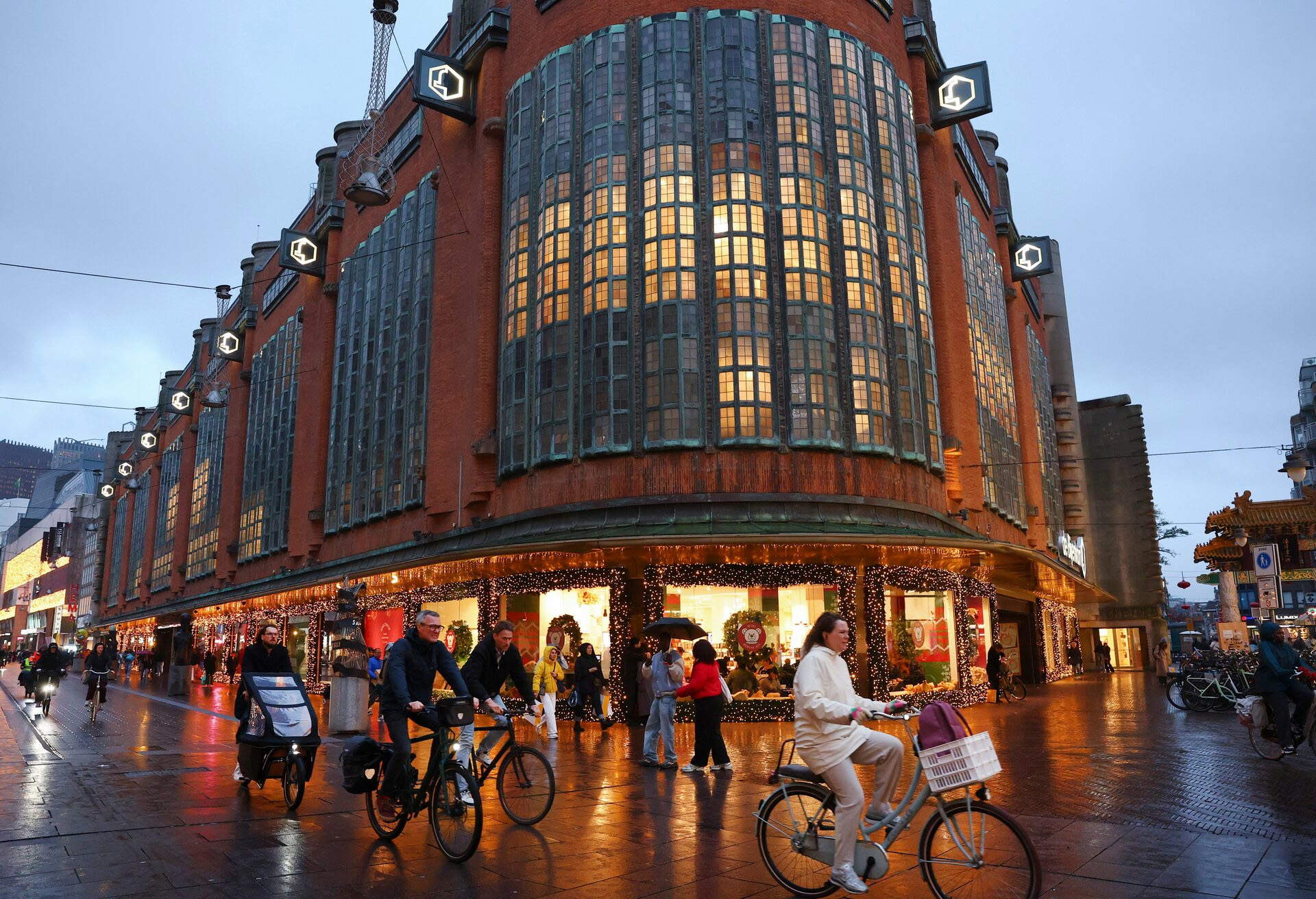
City synonymous with international justice is a lively place
This Dutch city is so synonymous with international justice that saying someone should be “sent to The Hague” is akin to calling them a war criminal. I was bornhere, just a stone’s throw away from the International Court of Justice and the newer International Criminal Court, both of which I cover as a correspondent for Reuters. And though my family left The Hague soon after my birth, it’s here that my work has always returned me — first in the early 2000s, when I started my journalism career, and again in 2015, after stints in Dakar and Belgrade.

This coastal city, which also serves as the seat of the Dutch government, is a lively place with some of the best Indonesian food in the Netherlands and plenty of coffee and lunch spots to meet secret and not-so-secret sources — as well as a beach around the corner if you need to clear your head.
Here are my tips on how to explore The Hague like a local:
Getting around: The best way to get around quickly and effectively is by bike. The Hague is very cyclable, with clearly separated bike lanes and, more importantly, attentive Dutch drivers who are used to sharing the roads. Most hotels will come with their own rent-a-bike service, but you can also rent a Dutch city bike at Haagse Stadsfietsen for as little as 10 euros ($11.60) per day.

If you do not want to brush up on your cycling skills, The Hague also has a very efficient and well-connected public transport network with trams and buses that you can pay for with contactless debit or credit cards.
Given the centrality of cycling in this city, the number one gripe of locals is when tourists wander onto the bike paths, oblivious to the danger and blocking traffic. Be bike-aware on the roads, even if you don’t see many cars. Cyclists have the right of way over pedestrians, except at crosswalks.
The definitive clothing item: It’s worth investing in some rain gear as The Hague has an average of 15 rainy days a month. The Dutch don’t accept a rain shower as an excuse to turn up late for anything, so when I returned to the city after seven years abroad, one of my first buys was an ANWB coat. While sometimes considered slightly twee — especially if you get matching coats as a couple — the go-to Dutch raincoat comes with reflective details, many pockets and a cycle-friendly design. They are sold by The Royal Dutch Touring Club ANWB, which has a shop in The Hague’s city centre. The price for a proper long-lasting coat is about 150 euros ($170).

What to eat: There is a reason you don’t hear a lot about Dutch cuisine internationally. It generally involves meat, potatoes and vegetables and is rather bland. The best food in The Hague is Dutch-Indonesian fusion, a legacy of Dutch colonialism. After the end of World War Two and the Indonesian fight for independence, some 60,000 repatriated Dutch colonial government workers and Indonesian refugees came to The Hague and about half settled in the city permanently. For a quick and cheap meal or on-the-go snack, I suggest heading to Toko Ming Kee in Chinatown, where you can order an Indonesian spekkoek, a sweet cake whose name translates to “bacon cake” because of the light and dark layers, and a lemper, a sticky rice roll with spicy meat filling.
The hot ticket: As an international law geek, I have to recommend the Peace Palace, the wonderful neo-Renaissance building that houses the United Nations’ highest court, the ICJ. If you visit while there are hearings, which are infrequent, and don’t mind waiting in line, you can watch proceedings from the public gallery. The Peace Palace also offers architectural tours that you can book online (but book ahead). Alternatively, the Peace Palace has a small but interesting visitors’ centre that gives an insight into the building and the court.

Getting away: If you want to get away from the city, you can indulge in “uitwaaien” — a Dutch expression that loosely translates to being outside in the wind to clear your head — at Scheveningen Beach. Located just 6 kilometres (4 miles) from the city centre, you can get there in less than half an hour by bike or tram, with trains going every 10 minutes during the day.
Let the North Sea breeze blow your worries away while you look at the stunning skies of scuttling clouds, straight out of a painting by one of the 17th century Dutch masters. Then enjoy a drink at the Kurhaus Hotel, a stunning turn-of-the-20th-century seaside resort and the site of the Rolling Stones’ infamously short first gig in the Netherlands in 1964, when they fled the stage after playing only four songs.

CITY MEMO DATA POINTS
Population: 500,000
Price of a cup of coffee: 4.70 euros ($5.50) for a cafe latte at Café Blossom around the corner from the Peace Palace. The cafe gets packed with lawyers and diplomats when there are big cases going on at the ICJ, and you can even spot the occasional judge.
Price of an ice cream scoop: 2 euros ($2.30) for a scoop of vanilla ice cream at The Hague’s landmark Italian ice shop Florencia.
Price of a bottle of water: Tap water in the Netherlands is safe and more closely checked than mineral water, so if you truly want to go Dutch, purchase a Dopper refillable water bottle for 14.95 euros ($17.30) from the Relay store at The Hague’s centraltrainstation and fill it in your hotel room, in a restroom or at one of the over a dozen public water taps.

Souvenir trinket for little ones at home: The best souvenir for small children is one of the many items featuring the rabbit Nijntje — Miffy — from the Dutch children’s book series of the same name. At the HEMA department store — which can be found at locations across the city, including the central train station — a 30 cm (12 inch) Nijntje plushie goes for 15.99 euros ($18.60), but you can also get a sticker booklet for 3.49 euros ($4). (Stephanie van den Berg/Reuters)


You must be logged in to post a comment.