
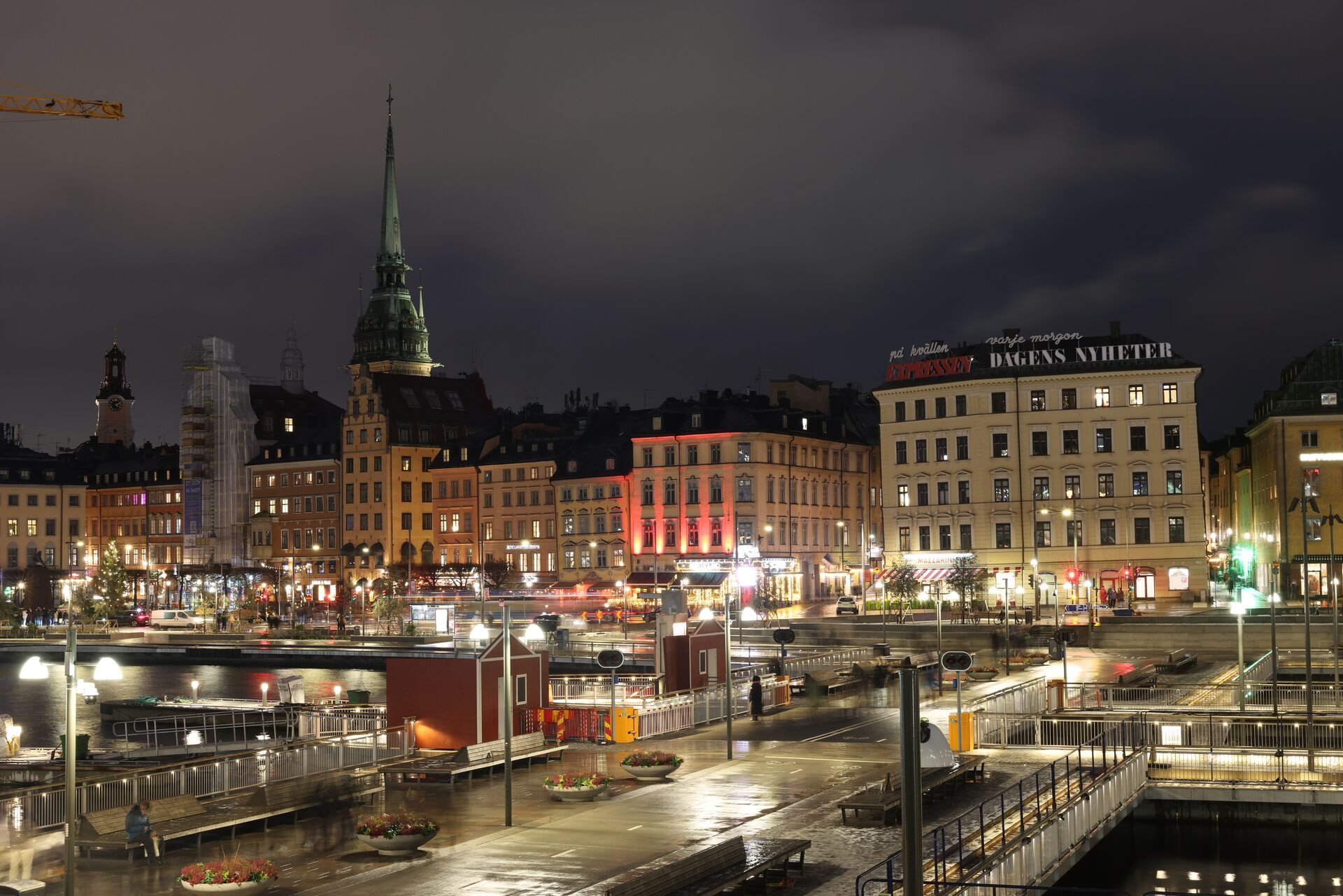
Swedish capital is built on 14 islands that separate Lake Malaren from the Baltic
One of the first things about the Swedish capital that grabbed me when I moved here from London 21 years ago to cover corporate heavyweights such as IKEA and H&M for Reuters was that it is all about water.

Stockholm isn’t a canal city, like Venice or Amsterdam, but it is built on 14 islands that separate Lake Malaren — Sweden’s third largest lake — from the Baltic. In summer, you can lounge in a lake—front restaurant or bar, take a dip from one of the many rocky promontories that dot the shoreline, or hire a kayak and paddle through the city. Even in winter, when the temperature can fall to 20 degrees Celsius below freezing, you can enjoy an outside hot tub, or “bastu”, with or without jumping into a freezing lake through a hole cut in the ice.
Whatever the time of year — be it the long, dark winters or the exceptionally bright summers, when we get to enjoy nearly 24 hours of daylight — there are plenty of bars and restaurants where you can take a “fika”, a Swedish tradition usually involving enjoying a cup of coffee and a cinnamon bun with friends.

Here’s how to explore my adopted hometown like a local:
The way around: Stockholm is very easy to get around. The underground is relatively cheap — a single ticket costs 43 crowns ($4.50) for 75 minutes, with reduced fares for students and pensioners — and conveniently runs late for night owls. You can also get a day pass for 180 crowns ($19) or longer periods.
But perhaps the best, and most scenic, way to see the city is to walk. The major attractions are just a stroll from the city centre, if you are fit and healthy. Electric scooters are another great way to get around.

Take to the water: In summer, a boat tour to one of Stockholm’s nearby islands or a mere 20-minute ride out into the Baltic to see Stockholm from the water is well worthwhile. On the S/S Stockholm, you can dine in the wood-panelled salon on board while watching out for seals and sea eagles. For a day trip, go to Grinda, a small island in the Stockholm archipelago where you can camp, swim and enjoy watching the clear night sky. Another option is Sandhamn, a trendy sailing hangout where you can watch boats competing in the annual Round Gotland race. Or visit Vaxholm to see the fortress where the Swedes fought off attacks by the Danes and the Russians on the capital in the 17th and 18th centuries. I’m biased, as I love outdoor swimming, but no trip would be complete without a dip in the clean waters of Lake Malaren or the Baltic.

What to see: On land, the ABBA museum is a favourite of tourists and locals alike, featuring costumes, karaoke and a quiz about the world’s most famous Swedes. If you go to the City Hall, you can see the stunning rooms where they hold the annual Nobel Prize banquet, a triumph of organization where more than 1,300 people are served almost simultaneously. Reuters journalists (myself included) are among the lucky few non-celebrities who get invited to gawp at the spectacle.
The Vasa Museum, which houses the world’s best-preserved 17th-century wooden warship, is a place to go back to time and time again. Built for King Gustav II Adolf, the badly designed and over-ornamented vessel sank in Stockholm harbour in 1628 on its maiden voyage. It was recovered 333 years later almost complete.

If you’re looking for a more active visit, kayaking around town is a great way to explore in the summer. In the winter, swap your paddle for the slopes by taking a quick ride on the underground and tram to Hammarbybacken for a bit of downhill skiing. Kungstradgarden in the middle of the city has an ice rink where you can hire skates for 100 SEK ($10.50) per hour.
What to eat and drink: Stockholm has 12 Michelin-starred restaurants and there is good, if expensive, food everywhere.
For atmosphere, you can’t beat Gyldene Freden in the heart of Gamla Stan or “old town”, serving classic Swedish dishes like meatballs as well as French cuisine. It’s been a watering hole for some of Sweden’s most famous poets, authors and painters since 1722, and the Swedish Academy — the body that awards the Nobel Prize in literature — gathers there every Thursday for a serving of traditional yellow pea soup and pancakes.

A 10-minute walk away is Mosebacketerrassen, which has a theatre, restaurant, live music and a great outdoor bar where you can look out over the old town and watch the cruise ships come in and out from Stockholm’s port.
Restaurant J — a 15 minute boat ride from the waterfront — has a New England vibe, great seafood and great views, too. For breakfast, go to Mellqvists Kaffebar and grab an egg sandwich, if you dare. In addition to egg, it contains Kalles Kaviar, a salty, smoked cod roe paste that Swedes go wild for but which is something of an acquired taste for visitors. A staple in egg sandwiches since the 1950s, it is often described as Sweden’s equivalent to Marmite for Britons.
Cafe Saturnus, a French-style breakfast place near the centre, has amazing — and oversized — pastries.
Sauna culture: No matter the time of year,no one should leave Stockholm without a bastu. I’d recommend Vaxholms Bastubat, a woodfired sauna boat just off Vaxholm harbour. They will even pick you up in a taxi boat from central Stockholm. Sauna culture may be more closely linked to Finland, but Swedes are big on it too.

CITY MEMO DATA POINTS
Population: 1.6 million people, if you include the outlying areas of the city.
Price of a coffee: 50 Swedish crowns ($5.25) for a medium-sized latte in most places. Swedes are among the biggest drinkers of coffee in the world on a per capita basis, though Finns consume even more. Coffee shops are everywhere, but if you are out and about, try the Koppartalten in Haga Park, built for the king’s guards of King Gustav III in the late 18th century.
Price of a cinnamon bun: 44 crowns ($4.63). The best buns come from Vete-Katten, a 100-year-old bakery with its main shop on Kungsgatan, in the centre of the new part of town.
Essential watch: Stockholm is the setting for much of Swedish writer Stieg Larsson’s “Millennium” trilogy, the film adaptation of which was shot around the capital.

“Stockholm”, from 2018, stars Ethan Hawke in a loose recreation of a 1973 bank robbery and siege where the hostages started to sympathise with their captors — resulting in the term “Stockholm Syndrome”.
Essential read: “1793: The Wolf and The Watchman” contains great descriptions of the dirt and squalor of Stockholm in the late 18th century and will help you navigate the old town.
Largest university: Stockholm University, 30,400 students. (Simon Johnson/Reuters)


You must be logged in to post a comment.