
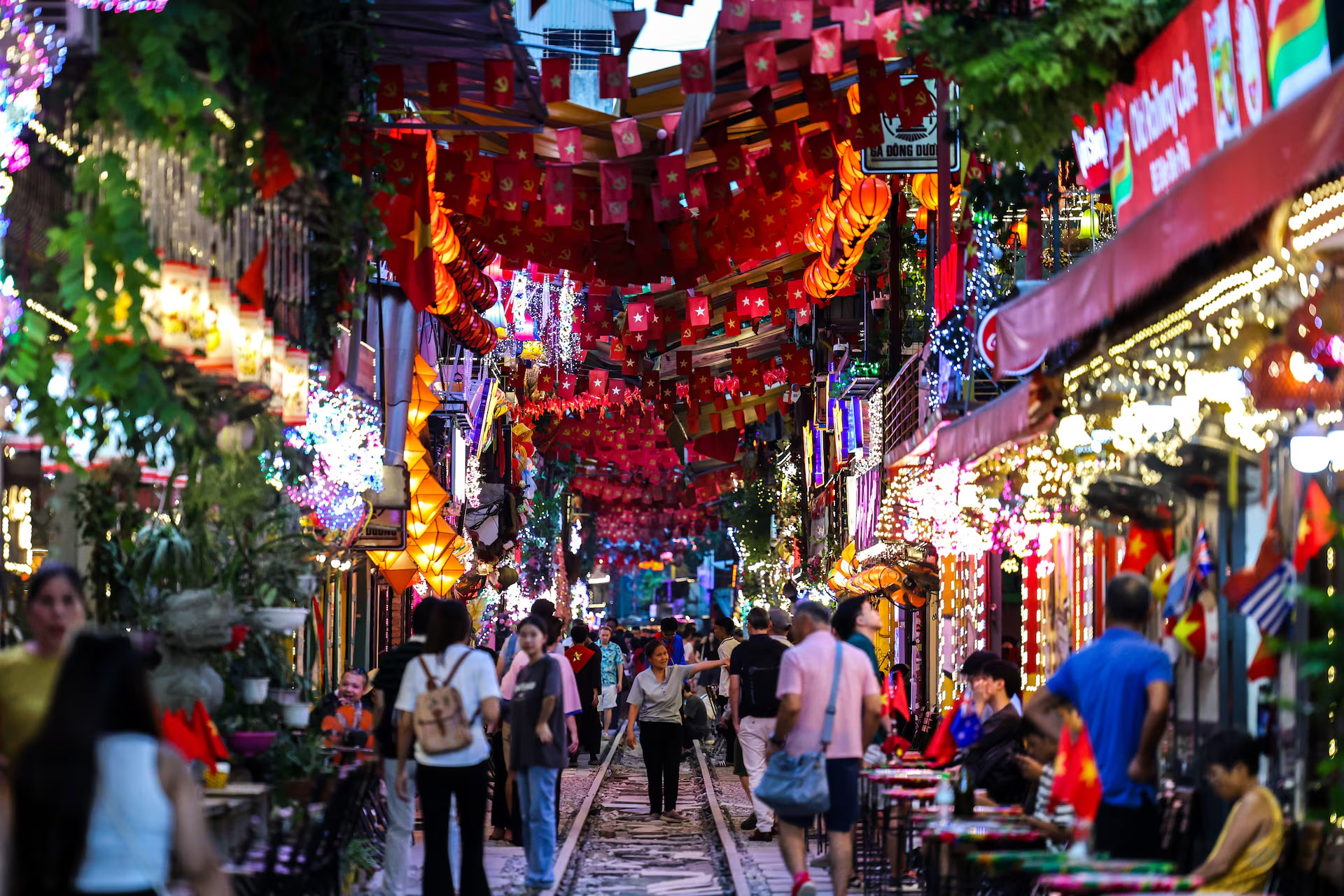
Decades of colonization has kept a French influence in everything
I moved to Hanoi in late 2022, drawn by Vietnam’s increasingly strategic role in geopolitics. As a native Italian who spent most of my decade-long Reuters career in Brussels covering the European Union, I also wanted to experience first-hand what it means to live in a rapidly developing country.

Since then, I’ve reported on stories such as Vietnam’s tariff talks with the United States, its industrial expansion plans, and the months-long political turmoil that led to the appointment of To Lam as Vietnam’s top leader in August 2024. But I’ve also come to discover a bustling city that is changing at a breakneck pace—one where street barbers serve their clients next to shimmering Made-in-Vietnam electric SUVs and where Confucian, Buddhist, and folk temples preserve an aura of calm amid the constant roar of motorbikes.
Here are my tips on how to explore the Vietnamese capital like a local:
Talking point: English is widely spoken here, especially among young people. While French influence is everywhere, owing to decades of colonization—from the ochre Indochine-style villas and state buildings to the banh mi baguette sandwich stands—hardly any Vietnamese people speak the language today. More useful for interacting with older generations, especially those with experience in power, is Russian, which many cadres learned in Moscow universities where they were usually sent to complete their studies.

Where to eat, sans meat: Although I had prepared myself for pork-heavy street fare—such as bun cha, a Hanoi speciality made of grilled pork and rice noodles—my favourites are from the city’s plentiful vegetarian spots, which originally catered to Buddhist monks’ dietary restrictions. Restaurants near temples, such as the Nang Tam diner, are usually the cheapest, with prices starting from about $3 for a set menu. At more upscale eateries, such as Vi Lai, expect to pay about $25 for a five-dish dinner without alcohol (yes, that’s the catch at most Vietnamese vegetarian places). Vi Lai is located a two-minute walk away from the infamous Hoa Lo prison, dubbed the “Hanoi Hilton” by captured U.S. pilots during the Vietnam War and now a museum.


Watering-holes: Beer is king in Vietnam, with drinking levels so high that swings in consumption often have an impact on the global earnings of brewing multinationals. Hanoians prefer to drink in traditional Vietnamese beer joints knownas bia hoi (“draft beer”), where a glass of a local, fresh, low-alcohol beer can cost about 50 cents.
What to see: Hanoi’s many lakes and ponds, as well as the intricate alleys that survive between large roads, offer unexpected pockets of calm in this bustling city—perfect for enjoying a cold coconut coffee. The entire 17-km (10.5-mile) shore of the gigantic Ho Tay (West Lake) in the north of the city is dotted with cafes. Truc Bach Lake, on the southeastern edge of West Lake, also boasts multiple bars offering local craft beers and cocktails, with the Standing Bar being among the most popular. Local cafe chains, such as Katinat and Phe La, have stylish coffee shops along the lake. Mom-and-pop alternatives include L’Amant, named after a French novel set in colonial Vietnam, and Gia Phuc (Happy Family), which is as close to the lake as it gets.


Street smarts: From experience, the larger the vehicle is in Hanoi, the less likely it is to slow down. Drivers here rarely yield to pedestrians and seemingly regard traffic rules as optional. Even walking on sidewalks can be challenging as they are often overrun with parked motorbikes, cafe tables, basins to wash dishes, open-air barbershops and, occasionally, roaming chickens. A better strategy is to use a ride-hailing app such as Singapore-based Grab or local competitors Be and Xanh to take a motorcycle taxi. A 10-km, 25-minute ride costs about $2.
Scooter commuters: Honda is such a dominant player in the local market that its name has become virtually synonymous with Vietnam’s ubiquitous motorcycle culture. But increasingly popular these days are the sleek e-scooters made by VinFast, a Nasdaq-listed automaker founded in 2017 by Vietnam’s richest man, Pham Nhat Vuong. They sell for as little as $450.

Essential read: Before moving here, I dove into Ben Kiernan’s 2017 “Viet Nam: A History from Earliest Times to the Present,” which authoritatively traces the fascinating history of the country and its people. The timeless novel “The Quiet American” by Graham Greene, set mostly in 1950s Saigon, is required reading for anyone seeking to better understand the eventful transition from French colonial rule to American involvement in the country. For a Northern Vietnamese perspective on the Vietnam War (or, as it’s called here, “the American War”), I recommend Bao Ninh’s 1987 novel “The Sorrow of War,” which was initially banned in the country because the Communist Party did not like its depiction of Vietnamese soldiers’ harsh life. I was able to buy a copy in one of the several bookshops in Hanoi’s Old Quarter that sell books in English. My favourite is Bookworm Hanoi, near Truc Bach Lake.


Local news: Media in Vietnam are strictly controlled by the state and the Communist Party, which partly explains why the nation is near the bottom of the Reporters Without Borders’ press freedom index. A VPN is necessary to access some websites. For news in English, Ho Chi Minh City-based Michael Tatarski’s “Vietnam Weekly” newsletter covers the main domestic developments in a concise style.
Not-so-fun fact: Hanoi topped the list of most-polluted cities some days this year, and it regularly exceeds particulate matter limits recommended by the World Health Organization. It doesn’t help that many people burn their waste, including plastic, in the street. For this reason, running outdoors – a favourite activity of mine when I lived in Europe – is not advisable. Wearing a face mask helps, especially in the driest months from December to March when air pollution tends to peak;you will see nearly everyone wearing a mask when riding a motorcycle.

CITY MEMO DATA POINTS
Population: 8.7 million
Cost of a coconut coffee: About $2.50 in most cafes in Hanoi
Great place to see a sunset: Virtually all cafes and bars on the eastern shore of the West Lake, with my favourite being the Drunken Duck.
Best time to visit: Septemberto November and May and June see the mildest weather, with clearer skies and higher chances of catching a stunning orange sunset. In June, lotus blossoms in Hanoi’s ponds, carpeting them with pink flowers.
Most popular car: The city car VinFast VF 3, which retails at $11,400.


You must be logged in to post a comment.