
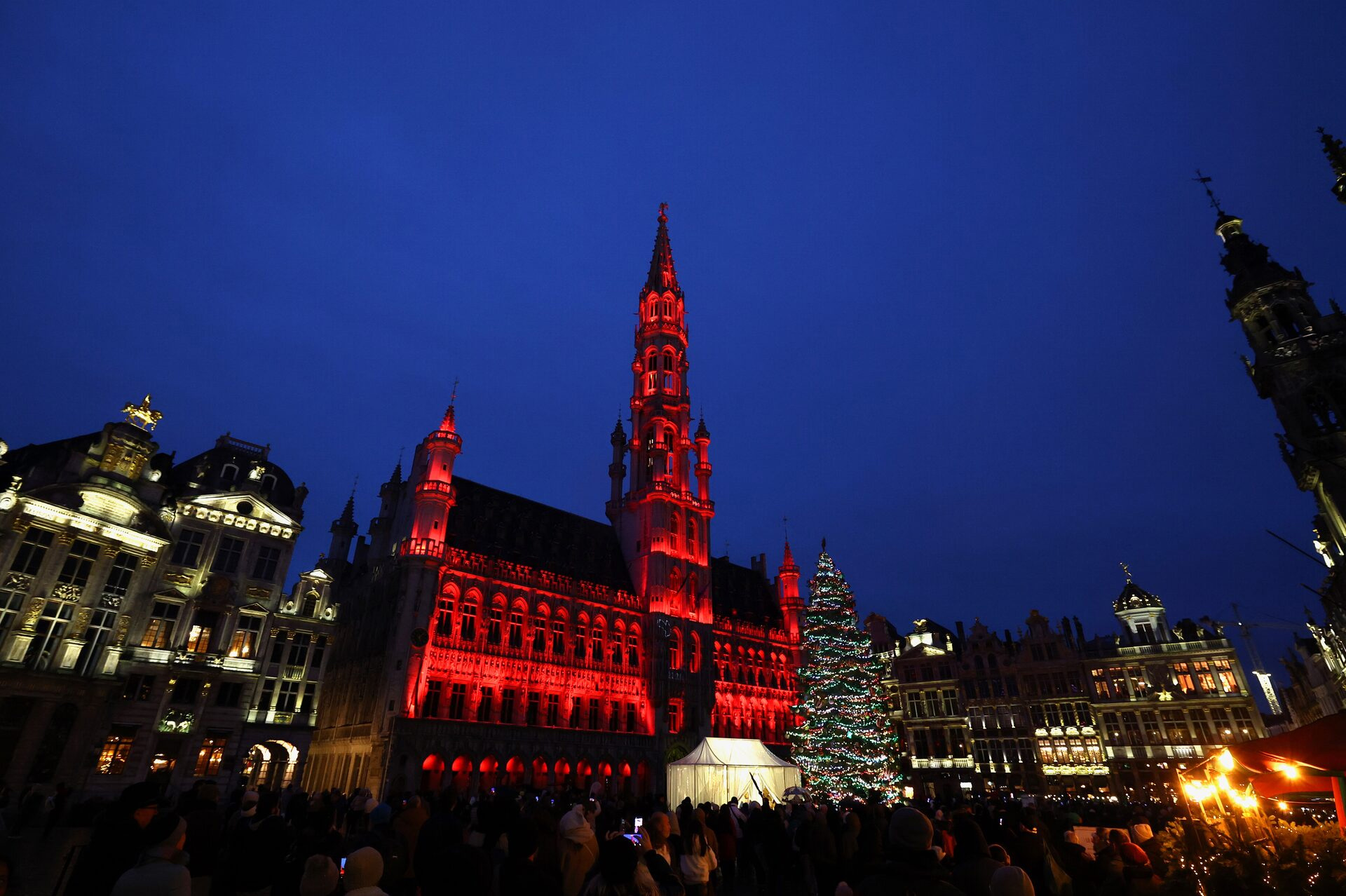
Insider guide to food and fun in the European Capital
If a painting could capture Brussels, it would be Belgian-born surrealist artist Rene Magritte’s “Empire of Light.” The sky is a daytime blue, while the lake house below sits in darkness — a contrast that mirrors the city itself. The heart of the European Union can feel haphazard and in an inexplicable state of disrepair, yet it’s also embarking on a trendy upswing.
I moved here from London nearly three years ago to cover European affairs for Reuters and enjoy the perks of a smaller city, of which there are many once you scratch beneath the surface.

Brussels, the home of Art Nouveau, saw much of its whimsical architecture replaced by modernist blocks following a major period of redevelopment that began in the 1960s. Still, the historic centre remains largely intact, along with its royal parks and beautiful Art Nouveau icons. Today, the city is undergoing a major facelift — one in which neglected neighbourhoods are being revived, trendy hotels are moving in, and new museums (notably the KANAL Centre Pompidou, slated to open in 2026) are preparing to open their doors.
But what I love most about Brussels are the huge parks and forests that surround the city. And for food lovers, Brussels — and wider Belgium — is a dream, boasting specialty chocolatiers and an astonishingly high concentration of Michelin-starred restaurants.
How to explore the EU capital like a local
Getting around: Bruxelles-Midi, the city’s main train station, may be a bit of an eyesore. But it’s an efficient transport hub, especially for day tripsto the nearby historic cities of Ghent, Antwerp and Bruges. Public transport is decent, but slow on Sundays.To get around under your own steam, the city has several fleets of e-bikes — helpful for its surprisingly steep hills.But beware the missing cobblestones!

Take a stroll: What struck me most when I moved here was the astonishing number of antique and furniture stores in Brussels. Start on Rue Blaes in the cute Marolles district, where you’ll find a treasure trove of antiques, including unusual pieces such as gasoline pumps from the 1920s. From there, wander to the Place du Grand Sablon, with its elegant church and flower garden. Or, if you are here on a Sunday morning, check out the antique flea market that takes over the PlaceJeu de Balle.
To escape the bustle, slip into Café Costermans’ hidden courtyard. Another oasis: the calm garden cafe at L’ Atelier en Ville off Avenue Louise, the city’s main shopping street.
The definitive food item: No trip to Brussels is complete without “les frites.” Traditionallycooked in beef fat, these calorie-bomb potato fries are a treat and often paired with “Américain” (the Brussels version of steak tartare) or moules (mussels) in the city’s brasseries. You can get a portion of frites at a typical stand called a fritkot, such as Maison Antoine in Place Jourdan near the European Quarter, where EU institutions such as the European Commission and European Council are based. My favourite “moules frites”, meanwhile,is at Toucan Brasserie in the Ixelles neighbourhood. The season for fresh mussels is from July to March, although this can vary from year to year.

Belgians also love oysters and “les crevettes grises,” a tiny shrimp still traditionally harvested by horse on the North Sea beaches. You should also be sure to try the gaufres (waffles) from strategically parked food trucks.
Where to eat: The newly renovated Place Chatelain has a market every Wednesday from 2-7 p.m., where you can buy seasonal produce and street food. You’ll also find numerous restaurants dotting the square, or, a bit further away, Asian eateries Old Boy and Maru, where you can dine on tamarind fish, bibimbap and spicy squid.
The market at Place Eugene Flagey (also recently spruced up) is open on Saturdays and Sundays until 1:30 p.m. The oyster and bubbles stall, which also serves freshly cooked razor clams, is a must.If you fancy a walk, the square is close to two beautiful ponds, home to flocks of parakeets.

Nightlife: For a nightcap, head to Café Club in Place du Chatelain for a Negroni, or to nearbyTarzan for wine and small bites.
For music, be sure to check what’s on at cultural hubs like Le Botanique, Bozar and Flagey. If you want to be more spontaneous, visit Sounds Jazz Club or Oken, a brutalist-style cocktail bar open on Thursdays, Fridays and Saturdays, with DJs starting late.
Faux-pas: Try to avoid speaking French to Dutch speakers, or vice versa, if you can help it. The divide between Dutch-speaking Flanders and French-speaking Wallonia has defined Belgium since its independence in 1831, with Brussels as its bilingual capital caught in the middle.

Getting away: For a local escape, I take my dog to the Bois de Cambre park, which backs onto the vast Soignes Forest. The park has a brasserie and several outdoor cafes by the lake like The Woodpecker, which has jazz in the summer. Other green escapes include several beautiful forests around Brussels such as Tervuren – home to the Africa Museum, which underwent an overhaul in recent years aimed at addressing Belgium’s colonial past – and Chateau de la Hulpe.
CITY MEMO DATA POINTS
Population: 1.25 million
Price of a coffee: 4 euros ($4.60) for a cappuccino at Le Kiosque in the Bois de Cambre.
Great place to see a sunset: When it’s warm, try the giant ferris wheel known as “The View” next to the Palais de Justice overlooking the city, or grab a beer at the Bozar Rooftop. Once renovations are done, head to the indoor restaurant atop the Musical Instruments Museum housed in a beautiful Art Nouveau building.

Largest university: The Université Libre de Bruxelles (French-speaking) and the Vrije Universiteit Brussel (Dutch-speaking) are the biggest in Brussels, with over 24,000 students each.
Unofficial motto: The pace of life is slower here thanin mostmajor European cities. In Brussels you’ll frequently hear the French phrase “à ton aise,” meaning “at your leisure.” (Julia Payne/Reuters)


You must be logged in to post a comment.