
An insider guide to travel, fun and food in Ottawa
When I announced in 1999 that I was moving to Ottawa with my Canadian diplomat wife and daughter after almost two decades in London and Moscow, unkind phrases like “poor you” and “tedious backwater” were uttered. More than 27 years later, I have no regrets.
Yes, it was dubbed the town that fun forgot. Yes, a long-forgotten American comic once quipped that the city got its name from two native words — Otta (closed) and Wa (after 6 p.m.).

That was then. Now it’s a lively, child-friendly city with most attractions conveniently clustered around the core. In 2025, it welcomed a record number of summer tourists, tempted in part by the weak Canadian dollar, high-profile music festivals and free admission to all national museums for children.
But don’t expect the majestic buildings and pretty 17th-century cobblestone streets you’ll find in Montreal or Quebec City. Ottawa was an obscure logging town when Britain’s Queen Victoria chose it to be the Canadian capital in 1857, and it has stayed relatively small ever since.
Here’s how to visit Ottawa like a local:
Getting around
You can easily reach most attractions on foot, by cab or via rental electric scooters. The best deal is the C$12.25 ($8.80) unlimited day pass on the OC Transpo transit system, which covers buses and the light railway. You must download the PRESTO app first (hint: it also works in Toronto).
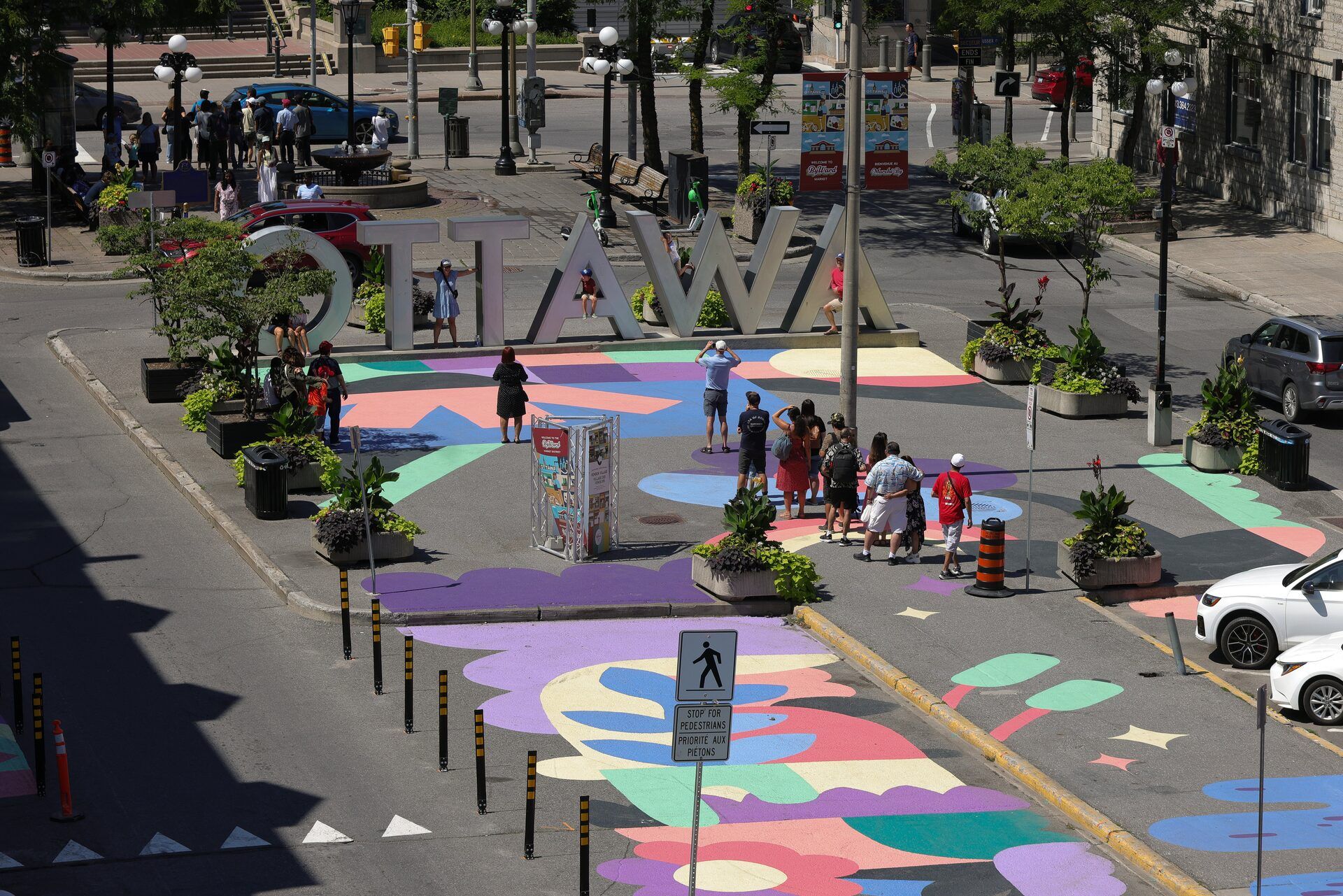
Go for a wander (and a bite): The best place to start is the ByWard Market. Once home to brothels, rowdy taverns and packs of aggressive loggers, it is now one of the city’s liveliest quarters for shopping, dining and entertainment.

The indoor market is crammed with boutiques such as Adaawewigamig, which offers Indigenous art and foodstuffs. You’ll find handmade quirky souvenirs and kids’ presents at Tickled Pink and a huge assortment of chocolates at Rocky Mountain Chocolate. And, of course, there is a maple syrup stall.
Here is where you’ll also find Ottawa’s definitive food item:the BeaverTail, a piece of whole-wheat dough that is hand-stretched, deep-fried, and served hot. The classic topping — and my favorite — is cinnamon and sugar with lemon juice. There’s a permanent store in the market at 69 George Street.
For a sit-down meal, try nearby Sidedoor for inexpensive Asian fusion cooking, the Luxe Bistro for a burger and Le Moulin de Provence for a hot drink and a pastry.
A few minutes’ walk away are the Parliament buildings. Unfortunately the majestic Centre Block is closed for long-term renovations, but free guided tours of secondary buildings are available.

Get moving
Once you’re full, it’s time for some exercise. My favorite activity is biking — the city has a dedicated 200-km (125-mile) network of paths and walkways through parks and along the Rideau and Ottawa rivers, which along with the Rideau Canal divide up the city. The Ottawa River pathway, which runs below Parliament Hill, affords great views. One of the reasons I like Ottawa so much is that just a few minutes’ bike ride from the center all you hear is birdsong.
If you prefer a leisurely way of seeing the sights, take a 90-minute boat cruise along the Rideau Canal, which costs around C$50 ($36).
Winter wonders
Ottawa is really two cities, depending on when you visit. In the summertime, temperatures hit 30 degrees Celsius (86 F), but in winter, as the thermometer dips down to minus 20 C (minus 4 F), the city takes on a new identity.

Ottawa ranks as one of the world’s coldest capitals — behind Astana in Kazakhstan and Ulaanbaatar in Mongolia — and is famous for winter fun. The Rideau Canal becomes a 8-km (5-mile) groomed skateway packed with tourists edging their way down the ice on rented skates before stopping for hot chocolate and BeaverTails at stalls set up on the ice. It’s reminiscent of a scene from a 17th-century Dutch painting. Pro-tip: the ice can get very chewed up, so go early. And wear a helmet.
The canal is the centerpiece of the 18-day Winterlude festival in late January and early February, which also features ice-carving competitions and a park with toboggan slides. The more adventurous can try out snowshoeing in Gatineau Park across the river, or the nearby ski slopes.

Local tipple: If you want something a little stronger than hot chocolate to keep you warm, try ice wine — so called because the grapes are left on the vine until they are frozen and then picked and immediately crushed, producing a sweet liquid which is then allowed to ferment. The result is similar to French dessert wines, but cheaper. The Vidal Icewine Reserve by Jackson-Triggs is a good, affordable option.
The definitive clothing item: To dress like a local (and keep warm in the frigid temperatures), pick up a tuque (pronounced “tuke”), a knitted woolen winter cap. These are widely available, and nice ones can be sourced from the Canadian brand Roots, costing around C$35 ($25).
The hot ticket: Canadians’ well-deserved reputation for politeness dissolves when they’re watching hockey (no one here calls it “ice hockey”). It’s a 25-minute ride to the Canadian Tire Centre, home to the Ottawa Senators of the National Hockey League. The regular season runs from September to April and tickets sell for as little as C$82 ($59).

Culture fix: Don’t miss the National Gallery, home to works by Rembrandt, Warhol, Mondrian, Rubens, Cezanne and Klimt, as well as paintings by Canadian artists likeTom Thomson. The striking glass and granite building is guarded by Louise Bourgeois’ “Maman,” a 30-foot-high sculpture of a black spider.
Those with children should try the Museum of Nature, the Science Museum, and the Agriculture and Food Museum, which in spring features Easter egg hunts and lambs on its city farm. Across the river in neighboring Gatineau is the Museum of History, which has exhibits on Canada’s often troubled relationship with its Indigenous peoples, many of whom live in poverty.
Biggest misconception: Ottawans are generally polite and law-abiding, but they have a mysterious habit of running red lights and ignoring stop signs. Check carefully before crossing roads or pulling out into traffic.
CITY MEMO DATA POINTS
Price of coffee: C$5($3.60) for a cappuccino at Equator Coffee or Little Victories, two cafes near the National War Memorial. And no trip would be complete without coffee and a donut at Timmy’s, as the Tim Hortons fast-food outlet is informally known.
Price of Canadian ice wine: C$40 ($29) a bottle from the LCBO chain of liquor stores.

Best place to see a sunset: Major’s Hill Park, next to the National Gallery.
Largest university: the University of Ottawa, 50,000 students.
Largest employer: As the nation’s capital, it’s unsurprisingly the 110,000-strong federal civil service. (David Ljunggren/Reuters)


You must be logged in to post a comment.