
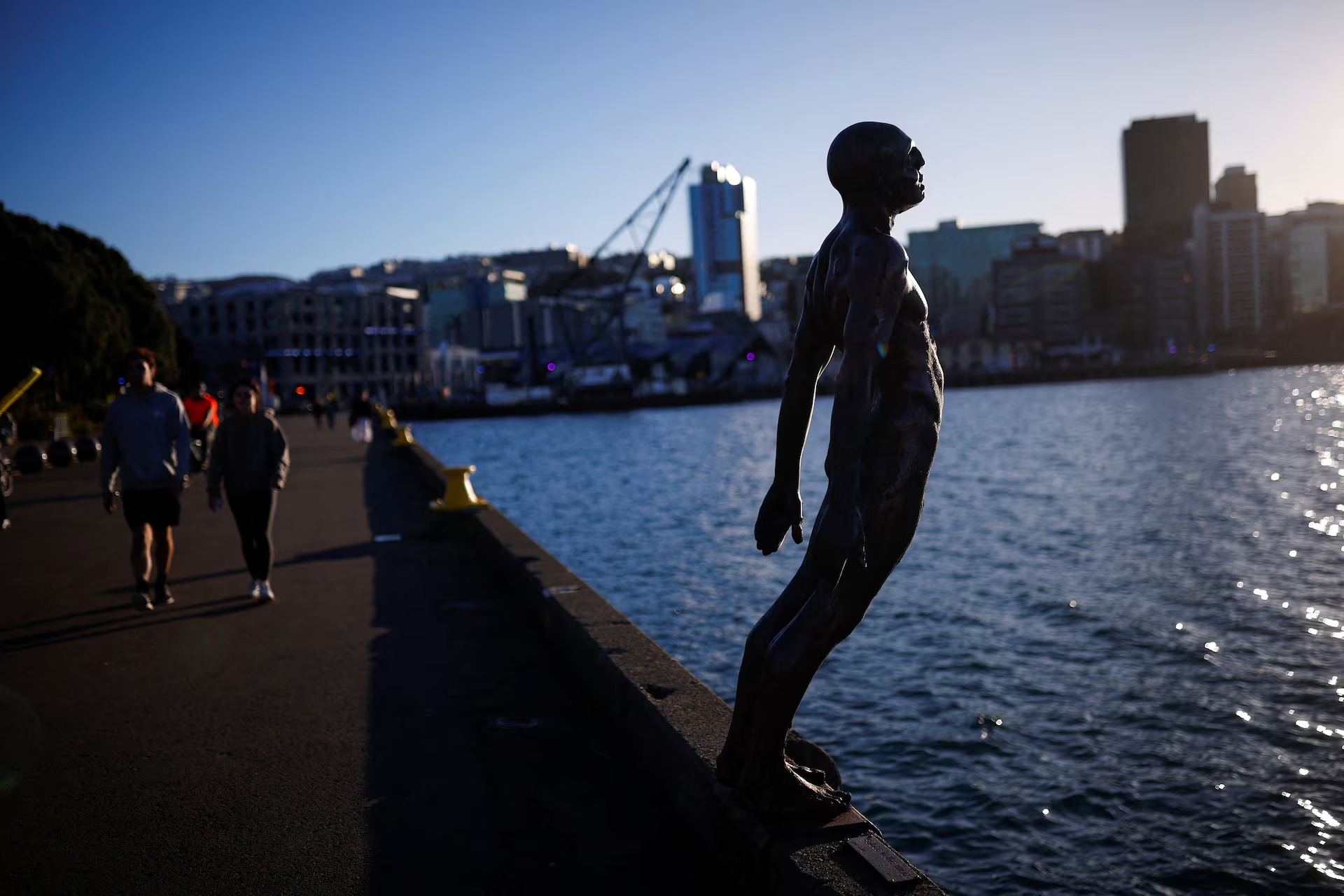
With a reputation for wild weather, New Zealand’s capital offers plenty to do indoors and out
“You can’t beat Wellington on a good day,” locals love to say—sometimes with pride, sometimes with irony. On sunny days, the harbour is glassy, waterfront bars are bustling, and the compact city feels both cosmopolitan and inherently Pacific. But Wellington (known alternatively by its Maori name Te Whanganui-a-Tara) also has a reputation for wild weather, when gale-force winds—often reaching speeds of 60 kilometres per hour—and horizontal rain batter the city.
Its gales notwithstanding, New Zealand’s capital offers plenty to do indoors and out—from independent bookstores, boutique cinemas, and a thriving coffee scene to bush walks and mountain-bike trails minutes from the city centre. Combine that with Maori heritage experiences and the sound stages where films like “Lord of the Rings” and “Avatar” were brought to life, and Wellington proves itself a cityworth exploring in any weather.

I know of what I speak. I’m a New Zealander, and Wellington—from where I cover the country for Reuters—is the city I’ve lived in longest as an adult. When I’m overseas, it’s here that I pine for when I think of home and it’s where I moved back to in the midst of the COVID-19 pandemic.
Here is how to experience the city like a Wellingtonian:
Coffee culture: Wellington’s first coffee shop is thought to have opened in 1840, just three months after New Zealand’s founding document was signed. And while coffee has at times played second fiddle to tea, in 2025 the city’s café culture is thriving.
While most cafes across the city serve a good cup of coffee, Newday in the inner-city suburb of Newtown is particularly worth a visit, with its pared-back industrial vibe and locally roasted coffee brand Peoples Coffee. Prefab Eatery in the centre is also good for those visiting on a weekday and boasts an onsite roastery.
Bites to eat, drinks to sip: Wellington’s restaurant culture has taken a bit of a hit recently as a slowdown in the economy and inflation has led a few of the capital’s gems to close their doors. But there is still plenty of good food to be had.

Wander up Cuba Street for a variety of eats in a selection of price ranges. The city has several good Malaysian restaurants—my favourite is Rasa Malaysia. If you’re looking for Italian, Scopa Pizzeria or 1154 Pastaria are both worth trying. If you’re happy to pay a little more, try the Turkish cuisine at Kisa. Cuba Street also has a good selection of bars for nightcaps or just to while away a few hours. I’d start with the wine list at Noble Rot, or The Ram for a pint. If you want to try some live music, San Fran—formerly Indigo, where Flight of the Conchords reportedly played their first gig—is also here.
Most locals have a preferred brunch haunt. I can’t pass up a trip out to Petone (technically in neighbouring Lower Hutt) and a visit to Seashore Cabaret. The beachfront location would warrant a visit even if they didn’t serve bottomless filter coffee and possibly the best smashed avocado on toast. For more indigenous flavours, head down to Karaka Café on the waterfront, where smoked Hangi hash and watercress pesto are on the menu.

Suburban restaurants have become more popular in recent years. Hop on a bus and try Salty Pidgin in Brooklyn for pides (Turkish pizzas), or Hillside Kitchen in Thorndon for seasonal set menus based on local produce. Wellington holds an annual food festival in August, which includes a competition where restaurants compete to invent the best burgers. One80 at the Copthorne Hotel won in 2024 with a burger that featured a Galouti lamb patty, a pulled lamb shoulder filo cigar, mint labneh, and chicory in a croissant bun.
The city has an array of craft breweries and a couple of gin joints. Garage Project in Aro Valley has both a cellar door and an intimate bar with a range of beers on tap. Or take the train to Brewtown Upper Hutt, where you can walk between breweries and there are often music events and a good Sunday farmers’ market.
Hot tickets: The city has a selection of great historic or independent theatres that offer wine, sofas and a dose of elegance. The Embassy was renovated for the “Lord of the Rings: Return of the King” premiere in 2003 and now shows a selection of mainstream and arthouse movies. Or try the Roxy out in Miramar, also home to Weta Workshop, which produced the sets and costumes for the “Lord of the Rings” trilogy and many other movies. Tours are available from NZ$57 ($33).

On sunny days, the harbour is glassy, waterfront bars are bustling, and the compact city feels both cosmopolitan and inherently Pacific.
Rugby and soccer are played in winter at Sky Stadium—affectionately known as the “cake tin,” for its distinct, circular architecture. Tickets for local teams, the Hurricanes and the Phoenix, are normally available on the day. Do wrap up warm as the stadium is not covered and can be bitterly cold. In summer, cricket is played at the Basin Reserve. This is worth a visit if for no other reason than the stadium is effectively a large roundabout with the country’s main highway circling it.
Culture fix: Te Papa Tongarewa, New Zealand’s national museum, is on the waterfront and has a huge selection of art and artifacts to spend an afternoon contemplating. World of WearableArt (WOW) is on from mid-September, an annual design competition that combines theatre, art, fashion, and music.
For something more active, try taking a trip in a Maori canoe known as a Waka and learning a little more about New Zealand’s first people and the areabefore European settlers arrived. Around July, Matariki, or the Maori New Year, is celebrated with light shows beamed onto the outside of thewalls of Te Papa.

Take to the hills: Wellington has nearly 7,500 acres of reserve land and open space, offering plenty of opportunity to hike, as long as you’re not afraid of hills. The paths are all reasonably well-marked. Shorter walks head up to the top of Mount Victoria for a view of the city and Oriental Bay, and you can detour to visit locations used in the “Lord of the Rings” trilogy.
For the more athletic, there is a city-to-sea hike that starts near New Zealand’s parliamentary buildings and botanic garden before ending up on the windswept South Coast. On a clear day, you’ll be able to spy the South Island and it’s not unheard of to see dolphins frolicking close to shore. There are buses that head back into the city from NZ$6 ($3.50).
And while kiwi birds have returned to the hills near the city, you’re more likely to spot them on a night walk at ecosanctuary Zealandia, along with a selection of other native birds.
Dress like a local: In a city where the politicians voted out the requirement to don a tie in 2021, the dress code is everything but formal. If you want to blend in, pick up a Blunt umbrella. Costing upwards of NZ$129 ($76), the uniquely shaped, New Zealand-designed brollies are said to have been tested and proved to withstand Category 1 hurricane winds.

CITY MEMO DATA POINTS
Population: 209,000
Price of a coffee: NZ$5.50 ($3.20) for a long black at Newday.
Price of an ice cream: NZ$8 ($4.70) for a single scoop from Duck Island Ice Cream, on Cuba Street or at 1 Willis Street.
Essential reading and viewing: While Katherine Mansfield’s 1922 short story “The Garden Party” does not explicitly name Wellington, it is believed to be inspired by her experiences growing up in the city and reflects on aspects ofitssocial landscape and environment. For something more contemporary, Wellington is the backdrop for Taika Waititi and Jemaine Clement’s 2014 film“What We Do in the Shadows” and showcases a community where diverse—and even supernatural—individuals coexist, echoing Wellington’s real-life openness to different cultures and lifestyles.
Largest university: Victoria University of Wellington, 21,000 students


You must be logged in to post a comment.